Menu

Rooted in the hills, shaped by women, woven with purpose

In the quiet breath of the Himalayan foothills, where pine trees whisper and time moves gently, something began to gather not loudly, not all at once, but like mist finding form.

It wasn’t built in haste; it was felt into existence.


A return to roots.
A reimagining of what those roots could become.

FROM A ROADSIDE DHABA TO A SHARED VISION

At the edge of a winding mountain road stood a small dhaba where this story started from. It wasn’t marked on maps in any special way, yet it had a way of making people pause longer than they intended.

The kind of place where tea tasted warmer, conversations lingered, and the mountains seemed closer than usual.


People came and went, as they always do on such roads. But one day, instead of passing through, four journeys slowed down at the same table.

What began as a simple stop turned into something else. Conversations stretched, ideas surfaced, and in between the everyday rhythm of serving chai and watching the hills fade into evening, something quietly began to take shape. It wasn’t a grand moment, nor had an instant realisation, just a shared feeling that this meeting was not accidental, and that this place, humble as it was, just become the beginning of something larger.

It wasn’t a grand moment, nor had an instant realisation, just a shared feeling that this meeting was not accidental, and that this place, humble as it was, just become the beginning of something larger. PCM Crafts.

The Four Pillars
Four Pillars

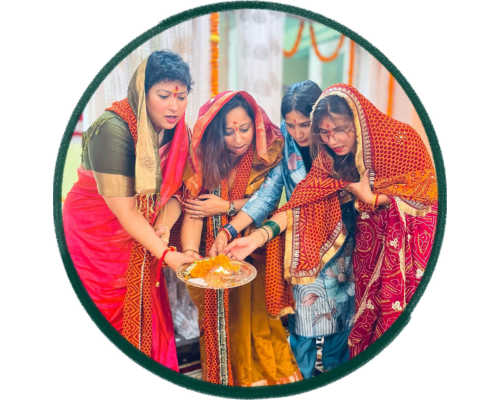
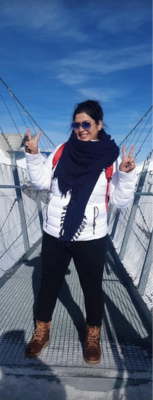
Madhavi Chand Mittal came with years of corporate leadership behind her, an HR professional who had navigated structure, scale, and success.

But beneath that, there was a quieter pull. Alongside her corporate journey, she had always been deeply committed to supporting girl child education, working closely with Ghanshyam Oli Child Welfare to create meaningful impact at the grassroots level.

This time she wasn’t just returning home, she was redefining what home could offer. Her vision was simple, yet powerful: to create opportunities so meaningful that leaving would no longer feel necessary.

Madhavi
Neha

Neha, a resin artist, had spent years refining her craft. What started as personal expression slowly turned into a desire to teach and share. She saw art not just as creation, but as a way to open doors for others.

Pooja, a dancer who runs her own academy, brought with her both discipline and creativity. Deeply connected to Pithoragarh, she played a crucial role in finding a space where this idea could take shape. What started as a shared vision needed grounding, and she helped give it just that a place to begin.

Pooja
Nikita

Nikita, while pursuing her PhD in Social Work, brought a different dimension to the initiative. A deeply kind-hearted person, she has always been driven to help those in need whether animals or people reflecting her genuine compassion in everything she does. She balanced academic rigor with a strong connection to traditional practices, showing that modern education and cultural roots can exist side by side. Her journey also led her to connect with the three women through Ghanshyam Oli Child Welfare, further strengthening the foundation of the project.

The First Spark: Project
Navshakti

Mr. Apul Mittal
Mr. Apul Mittal
Director & Founder – PCM Groups

The idea was taking shape, but it needed a push to move forward.

That came when Mr. Apul Mittal a saviour is disguise extended his support to the initiative, helping formalise Project Navshakti and giving it the structure it needed to begin.

Soon after, the first bulk order arrived. There was a sense of stepping into something new, figuring things out, working together, and making sure it all came through.

When the order was completed, it marked an important shift. It showed that the work being done here could reach beyond the local space and hold its value.

More than anything, it reinforced a simple truth: the women of Uttarakhand already had the skill and strength. They just needed the right opportunity to bring it forward.

Project Navshakti

Artisans: Where home, heritage, and hope come together

Women Artisans

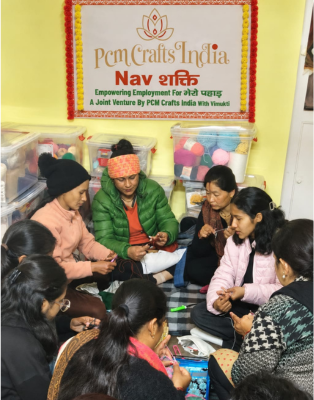
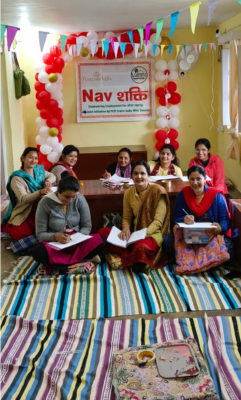
The women who joined the initiative are called the Navshaktie, a name that quietly carries strength and a sense of identity. They are homemakers, young girls continuing their studies while trying to support their own expenses, and women who have chosen to shape their own journeys, even when it means stepping away from expected paths like early marriage. PCM Crafts keeps its doors open for all of them. With free classes, it becomes a space where learning begins simply with hands, patience, and the willingness to try and slowly turns into a means of standing on one’s own feet.

These women come with skills they have grown up with, things they have seen and practiced over the years. Crochet, Aipan art, resin work, and ceramics are not introduced as something entirely new, but as familiar crafts seen in a new light, shaped with care and purpose.

And in all of this, each artisan is seen as an equal. Their work is valued and fairly compensated, so that the journey forward is shared, steady, and truly their own.

Every product carries a clear sense of origin. The materials, the techniques, and even the pace of creation reflect the environment they come from. These are not factory-made items; they are shaped through time, effort, and individual attention. When someone picks up a piece, they are not just seeing the final product, they are engaging with the process, the place, and the people behind it.
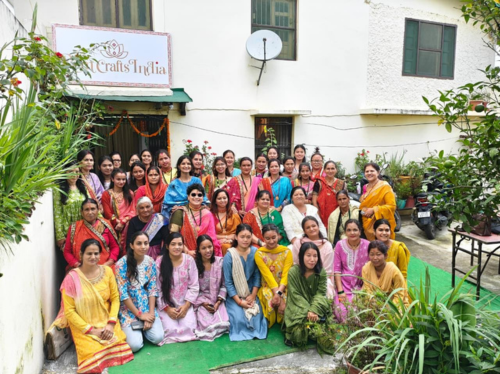
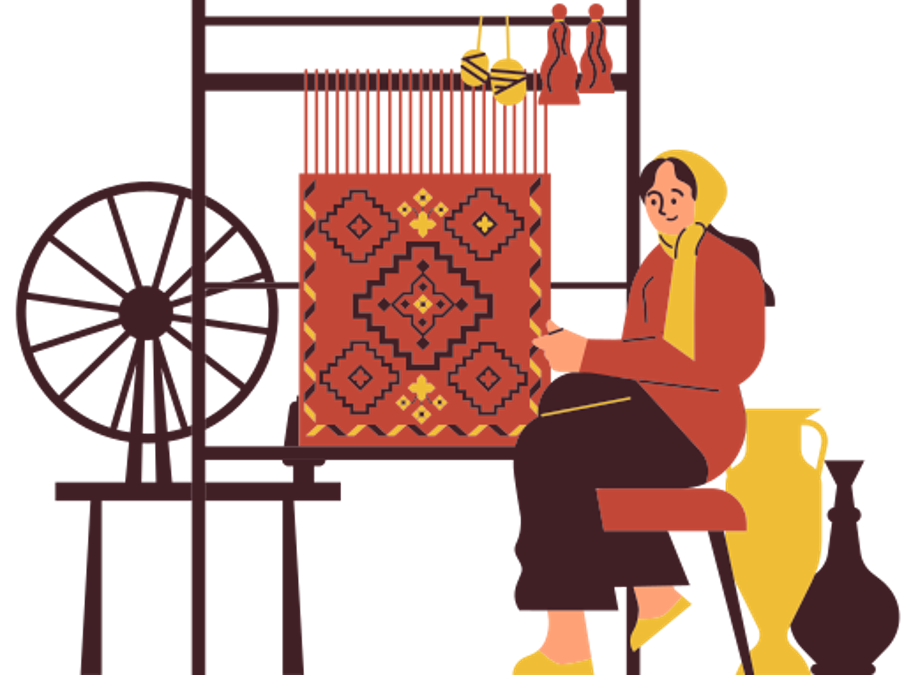
Rooted locally, rising collectively, building futures where they belong

The larger goal of this initiative is to create sustainable opportunities within the region.

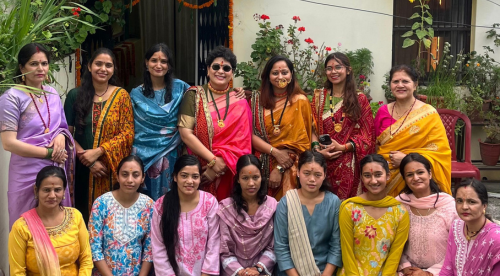
Women are able to earn while continuing to live in their communities. Younger generations are exposed to both traditional skills and new forms of learning.

The Kumaoni language and cultural practices remain an integral part of daily life, while English education adds another layer of accessibility.

Growth here is not about moving away, it is about strengthening what already exists.

Community Women

Empowering hands, preserving heritage.

As the work reaches exhibitions and wider audiences, it carries more than just products it carries stories.

Each piece represents effort, skill, and a collective vision.

At its core, this initiative is about enabling people to build on what they already have and ensuring that tradition continues to evolve without being lost.